Learning Gratitude in 2014

Today is January 31 and tonight people will be celebrating the coming of the New Year. In typical New Year’s fashion, I am reflecting a bit on the past year. I love the beginning of the calendar New Year. People are motivated and hopeful….I’m not into the “New Year-New Me” kind of thing because I’ve learned that you can’t wait to make positive change, but I’m always happy to see people motivated. That positive energy is contagious.

I actually renewed my health goals at the beginning of December. I didn’t want to wait until New Year’s to do it. I wanted to get a jump start on what I want for myself and my family. I went back to Weight Watchers (which helped me lose 32 pounds in 2001-2002), and continued with my personal training sessions. I’m going to begin my New Year 7 pounds lighter as a result. I’m also going to begin 2014 feeling much better mentally, spiritually, and emotionally than the last 2 years.

The biggest contributor to the improved mental/spiritual/emotional condition in 2014 was actively practicing gratitude….consistently remembering to give thanks as soon as I wake up. We tend to think we are grateful for this life, but you notice a difference when you start to consciously develop the habit of saying “Thank you” and counting your blessings upon waking. It puts me in a positive frame of mind before I get out of bed. It generates positive energy. And like I said a few paragraphs ago, positive energy is contagious.

Gratitude brings positive energy….positive energy brings peace of mind and spirit….and that peace leaves room for the good stuff, like being happy for others and enjoying their successes. It also brings the belief that you can have your own success in whatever way you define that for yourself, and motivates you to take the steps to gain that success.

I do love this life and everyone in it. It’s amazing when I hear my children say at random times, “I’m thankful for…….” As I am re-learning gratitude, they are learning it as well. My Christmas gift from my babies was  bracelet with a charm that says, “I love you to the moon and back”, and it came on a card that said: Love this life….Love is about welcoming the blind turn and the possibility that there’s no such thing as coincidence….and that empathy is incredibly sexy….and that it’s never too late to pick up a guitar or a paintbrush…or to make an amend or to make a new friend….Love this Life.

Those are my thoughts this morning in my quiet house, while everyone sleeps…..while enjoying my coffee. Feeling grateful for all the blessings in my life.

Why Culture is Important to Health

This is the original, unedited, version of a newsletter article I wrote that was just released today. I wanted to share this on my blog after it came out in print.

One dictionary definition of “culture” is “the sum total of ways of living built up by a group of human beings and transmitted from one generation to another.” Indigenous people are rich with culture. Not only because each sovereign nation has its own definitive and unique sum total of ways of living, but because cultural knowledge is seen as valuable…priceless. And cultural knowledge is deemed necessary to our way of life as Indigenous people.

Dakota/Lakota/Nakoda people have a term for “healthy lifestyle” or a “good way of life”. Wicozani is not simply a state of physical health, but a world-view, a philosophy practically applied, that attends to a person’s physical, mental, social and spiritual wellness. Wicozani encompasses all that contributes to our wellness, our good way of life, which for Indigenous people begins with culture.

Indigenous ways of life prior to Western contact included our own food systems, healing traditions that included knowledge of medicinal plants and spiritual practices, plenty of physical activity, and strong social support amongst our tiwahe (immediate family) and our tiospaye (extended family). Our gender roles were strong and equitable and contributed to the well-being of families and society. Our adults taught children what was expected of them to become strong, healthy, productive individuals by example. All generations were considered valuable to society and were cared for accordingly. Tribal and family history was taught with stories. Our Indigenous languages offered explanations for environmental and universal phenomena that cannot be wholly translated into English, but recently have been found to be in –line with prominent scientists and theorists. We continue to transmit this knowledge to younger generations today.

We were once some of the healthiest people on the planet. We lived and practiced Wicozani. It was normal to us to pay attention to and take care of all aspects of ourselves.

Life is not easy today. Stressors abound with personal and family finances, job insecurity, limited access to affordable, healthy food and exercise outlets. There is social stress from living as an Indigenous person in a Western world. Contemporary society pressures us to believe that one aspect of our wellness is more important than others, whether it be education, job success/material success, or physical health. When life’s stressors start to pile up and make us feel overwhelmed, or when we start to notice our own mental, emotional and physical health failing, or that of our loved ones, our biggest asset in the search for Wicozani, is being able to tap the innate cultural knowledge that exists in all Indigenous people. Remember how strong your people were at one point. Know that you already possess the knowledge passed down from our ancestors. And know that you have everything you need to be strong and healthy once again.

Motivation….that elusive “thing”

I have osteoarthritis in both hips. I am only 46 years old and I am looking at total hip replacement surgery sometime down the line. It’s hard for me to run because of the ensuing joint pain and I’m losing range of motion in my right hip. It’s painful to tie my shoes or tape up my moccasins when I dance. I can’t dance the way I used to even 2 years ago….I have to modify several of my steps or just not do them.

I am getting a good lesson in dealing with a chronic condition….like diabetes or lupus or rheumatoid arthritis. It’s hard. It’s hard to get motivated to find what works to manage the pain. It’s hard and very emotional when I look at what may be down the line for me…it’s hard when I think about losing the things that have been such a big part of me for so long. Like running and shawl dancing. I have a lot of ups and downs and it’s hard to tell anyone about it because I don’t want to drag anyone down, and I don’t feel very many understand. I just recently went through a very difficult and emotional time, one of several that I’ve experienced in the last 20 months.

But this week I have felt awesome. Really really good. I feel like I have found and gotten a good grip on that thing that health educators talk about all the time…”motivation”.  Defined as “the general desire or willingness of someone to do something.” In order to make positive change, we must be motivated to do so. I remember working a social work job and one of the social work specialists said, “They don’t train us in this job how to motivate people to change.” Which is true. While psychologists or public health workers can be trained in motivational interviewing (a technique used to evaluate the level of a person’s willingness to change and help push them forward), most people in the helping professions are at a loss as to how to motivate people.

There are 2 types of motivation: “Intrinsic” and “Extrinsic”. Extrinsic motivation is where your motivation comes from an external source….like getting good grades because your parents offer to pay you for every A on your report card, or buying you something if you make the Dean’s List. There are endless examples of extrinsic motivation….but this type of motivation is short-lived. It may last until the reward has been earned and then it’s gone. It may disappear before the reward is earned if the reward seems too far away or unattainable. Point is, It doesn’t last long. Intrinsic motivation, is the internal desire to change….it can be based on some type of perceived reward or fear that hits close to home. My best example of that is when a grandparent makes long-term changes to their health regimen in order to be able to see their grandchildren grow up. Or a person decides to lose weight or exercise more, not because they want to improve their appearance alone, but because they want to FEEL better both physically and emotionally.

My motivation has had some severe ups and downs since my diagnosis. I believe I’ve had a string of short-term motivated times because my motivation has been extrinsic…I’ve been motivated to do my PT exercises until I felt it wasn’t really helping the pain or help me get back to running. I’ve been motivated to just keep doing what I’ve been doing, kind of like rebelling against my OA, only to be struck down by debilitating joint pain. I’ve been motivated to try all different kinds of supplements until I overdid my activity and felt miserable because of the pain.

These days I feel very motivated. And I believe the positive vibe I have going is because I’m finally sorting out everything I have tried before, which includes changes in diet, supplements, hot yoga, biking, reaching out to friends and family, and changing my way of thinking of my dance career. A few weeks ago I was looking at the near-end of my shawl dance career….I thought that I could last another year or two at the most and then I would be done. And when that sunk in, I grieved….like I was losing a life-friend. Thankfully my friends, my companion, and my family pulled me out of that pit of despair. I have a sense of hope now….which feels brand new to me. And I have a deep-seated confidence, which is also new, that I will achieve my wellness goals that I have altered in a positive and realistic way. Both of those feelings, the hope and the confidence, have boosted my motivation.

My motivation comes now from knowing that I can manage my OA pain. It’s not hopeless. A good quality of life is not out of my reach.  I’ve had several weeks of pain-free joints and I’m confident that what I’m doing is working and that I can continue. I KNOW what works now. Limiting carbohydrates in my diet, taking some supplements that are working, including Xyngular’s Global Blend, alfalfa, Omega-3, a B-complex, and drinking my turmeric tea. Drinking alot of water. Eating alot of nutrient rich vegetables. Avoiding commercially raised feed-lot red meat and switching to grass-fed beef. I love the elliptical machine…it feels like I’m running without the joint pain. Stretching, I am learning to love and get better at. And getting my rest. My motivation increases each day that I wake and can walk with little to no pain. And my shawl dancing….we’ll see how that goes. But I’m hopeful. I’m focused and grateful for what my body can do….instead of obsessing about what it can’t do. I’m looking at all I have to gain with maintaining these positive changes, instead of thinking about what I am losing. When I make food choices in a restaurant I think about what will help me the most, and that means selecting salmon and spinach and broccoli and giving away my bread and NOT ordering dessert. I don’t think about HAVING to give up a French Dip sandwich or a slice of lemon meringue pie, I think about all the good things the salmon and the Omega-3 and all those green veggies will do for my body and my joints. So my motivation comes from a place of positive thinking, encouragement, helping and healing my body. Because I want to feel better. I love how I feel when I do these things. The changes make my bad days not so bad and make the good days that much better. I’m making myself better, which will make me better for all those around me.

I really want to publicly thank my husband Joe B…who has had to put up with my mood swings but he never gives in to my negative thinking. And I want to thank my sister Sharon who is my biggest cheerleader and always finding new things for me to try. My sister Sandy, who with my sister Sharon, always keeps it real with me, and my BFF, my Maske, Erica….my example of perseverance through tough times. My brother Elwood because he has no idea of how special he is to me. Special acknowledgement and thanks to Mike LaFrombois and Kevin Tacan….the male version of “maske” for me. They both have such positive outlooks even with all they deal with, and lend me their good vibes all the time. They are excellent listeners, and Kevin recommended the alfalfa supplements. These people help hold me up even if they don’t realize it, and I’m eternally grateful. Wopida tanka to each of you, and to the others I didn’t mention (you know who you are) who have helped me in any way.

Eating is complicated….

Image

I teach a class called “Diabetes and the Native Americans”. I took over teaching this class seven years ago and it has morphed from a wellness/exercise class to a culturally-tailored, science-based course on how type 2 diabetes impacts Native populations. We discuss risk factors, symptoms, diagnostic tests, complications, in addition to the history of Native health and all the legislation that has impacted our population’s health. During the unit where we discuss prevention and management, we discuss eating. Just a whole lecture or two devoted to just how and why we eat.

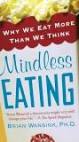
I first read this book in August of 2008. I was overweight, having gained weight from breaking my foot the previous summer, and had difficulty motivating myself to track calories and keep up with my food journal. I don’t remember what made me buy this book (“Mindless Eating” by Brian Wansink, PhD), but I read it on the way back from a powwow in Michigan. It was eye-opening. And my first insight into the complicated maze of the psychology of eating.

There is so much fascinating information in this book: food labs to research exclusively what will make us eat more, “health halos”, why we seek comfort foods, how labeling and marketing campaigns convince us to buy more/eat more, and what was most interesting to me….the different “cues” to let us know when to stop eating. I didn’t realize that we are socialized to know when to stop eating.

For example….as in the book, I ask my class “When do you know that you have had enough food? When do you know when to stop eating?” I get all kinds of answers. “When I fall asleep”, or “When I have to unbutton the top button of my jeans”, or “When I have to change into stretchy pants”, or “When my plate is clean” or “When I’m full”. I got similar answers to what Dr. Wansink lists in his book. I catch myself telling my kids “just 2 more bites” which means I am socializing them to eat more as well (I have since made a concerted effort to not do that).

I read in his book that eating until you are full, and “eating until you are no longer hungry” are two entirely different things. He went on to describe how there can be a 25% caloric intake difference by stopping eating when you no longer experience hunger, as opposed to when you feel full. I like the examples he gave from France and Japan and how they are socialized to eat until they are no longer hungry. In the U.S., the love of Golden Corral restaurants (my husband’s favorite) and the proliferation of casino buffets, we tend to encourage eating until we pass the point of being full. Although I am well-acquainted with the concept of “eating until you are satisfied”, that phrase never truly clicked with me….but eating until I wasn’t hungry anymore did click (*lightbulb!!*)

So I had to see for myself. After getting back from Michigan and thinking about the concept of “eating until I wasn’t hungry”, I gave it a whirl. I had some leftover taco meat that I was going to fix a salad with for my lunch. I served myself the amount I normally eat, but I paid close attention to how I felt as I ate. I didn’t read or watch TV, or do anything that would take my mind off the eating task at-hand. I ate slowly, drank water, and when I reached the point where I didn’t feel hungry anymore I looked at my bowl. There was approximately 1/4 left of what I served myself. I then set about to see if those results would be replicated in my dinner and breakfast the following morning. I discovered I ate 25-30% LESS when I really attended to what I ate and stopped when I didn’t feel hungry anymore.

I ended up losing about 6 pounds within 2-3 weeks just by paying attention, or being mindful of what I ate and how I felt. I didn’t count calories, I didn’t buy any specific “diet friendly” foods (such as low-fat or fat free or low calorie). I I felt much more comfortable after eating because I wasn’t stuffed. As a result, I started serving myself less food so it wouldn’t go to waste, and learned to take more if I felt I really needed it. I figured if I didn’t stop eating when I was no longer hungry, the food was going to waste in one of two ways: it would either be left on my plate and go to “waste” and be tossed out, or it would go to “waist” and be stored as fat in the form of a muffin-top if I cleared my plate and didn’t burn up all the energy I took in. It was a true epiphany.

Native people have additional factors to deal with as well in regards to what we eat and how much we eat. On-going colonization (the methods used by dominate society/government to subjugate Indigenous peoples) is a huge factor in the status of our health. Under the colonization heading we can list historical trauma, food insecurity, socio-economic factors and all the mental health issues such as depression, anxiety, substance abuse, trauma from abuse. These factors can make it difficult to stop eating when we are no longer hungry. If you have experienced times where there wasn’t enough food, or have learned through hard life’s experiences that you need to eat as much as possible as fast as possible because you don’t know when your next meal will be, it will make it next to impossible to not clear your plate because you have been conditioned to not waste food. If you have attended residential boarding schools or were in the military, you have been conditioned to clean your plate. Depression and anxiety, or chronic stress, heavily influences our eating behaviors, as does substance abuse. And that’s not even taking into account the sugar/starch/carbohydrate-laden commodity foods many of us grew up on, and may find comfort in. We also have our cultural/social mores, many times which dictate having to serve ourselves a portion of each food offered at a feast or ceremony, or not turning down an offer of food so as to not offend a host/hostess in their own home. Although these factors influencing our eating are not insurmountable by any means, they are deeply entrenched and it will take concentrated effort and practice, and learning new coping mechanisms to overcome them to regain our health.

Like I tell my students, eating is complicated. There is so much more to healthy eating than just “don’t eat junk” (which is a blog post all on its own). Like one of my previous weight-loss participants said, “There’s more to it than just making poor choices.” We have many many influences on what we eat and how much we eat, but I truly believe they can be managed and we can improve our collective Indigenous health.